OG Yeti 100 Mile Endurance Run –Don’t Fear the Creeper!
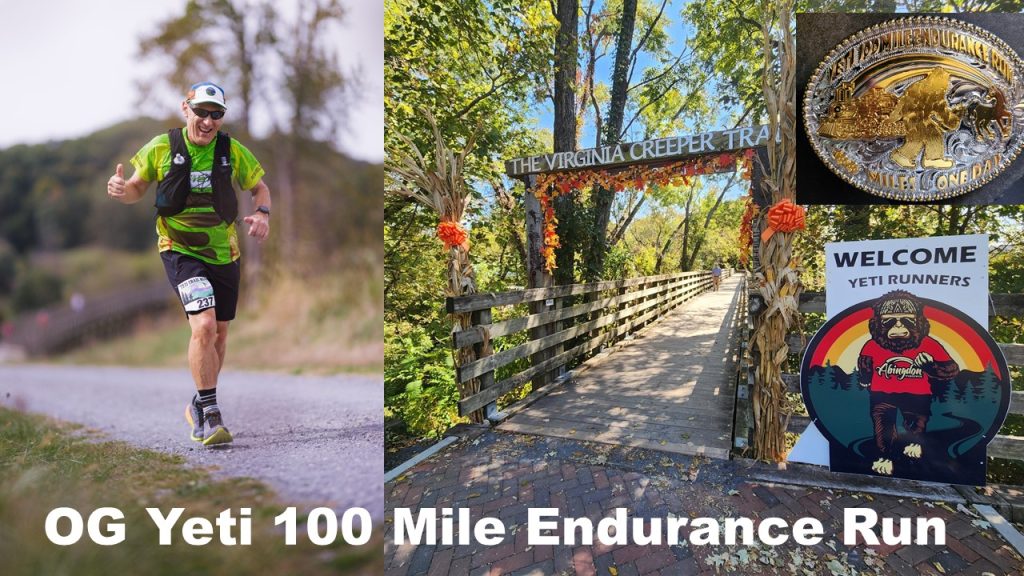
Running the OG Yeti 100 Mile Endurance Run in Abingdon Virginia was never in my plans. I had signed up back in May for the Tunnel Hill 50 mile in November; and running a 100 mile race one month before my target 50 was definitely not in my training schedule! My original 100 mile target was the Oregon Cascades 100 in July. But forest fires put an end to that plan. The race was cancelled just three days before it was scheduled to begin. Man, was I bummed. So I immediately scanned the race calendar for a redemption 100—something that looked appealing and with logistics that would work out for me. The Yeti Race caught my attention especially with its course in the gorgeous Blue Ridge Mountains of Southwestern Virginia. Just one problem—race registration was closed!
Back in September of 2022 I met Yeti Trail Runners’ founder and race director Jason Green atop my absolute favorite mountain, Sourdough Mountain in North Cascades National Park. It was great timing—because one of my friends had just run one of his events and she spoke highly of him! So I decided to reach out to him and see if there was the possibly of one more spot opening in the race. To my excitement and with much gratitude there was—I was stoked! I would be heading off to Virginia in early October to run my second 100 miler!
Green is originally from Virginia and now lives in Washington. He directs races in the Northwest and Southeast. He worked for years as a craft beer distributor. In 2010 he founded in his garage—not another craft beer—but a trail running community. He built four miles of trail, invited friends to run, and socialized later over a good beer in his garage. He named his running operation after his favorite beer, Yeti. And so was born this very enthusiastic, supportive and growing trail running community. I was excited to finally be running one of his races—the OG Yeti 100 Mile staged from the little arts community of Abingdon.
Like most of the ultra-running community and why I like it so much, the Yetis are eclectic. Green is a big skate boarder and he actually gives out skateboards to race registrants. I skipped the board but definitely took some other swag—a hoodie, socks, and ice bandana—all stuff that I definitely can use. The race is held on the Virginia Creeper Rail Trail. Named for the narrow gauge railroad (which also happens to be the name of a native plant in these parts) that crept along this mountainous route; the trail is 34 miles long and designated as a National Recreation Trail. In 2024 Hurricane Helene seriously damaged the trail and forced the race to be cancelled that year.
Virginia officials made it a priority to reopen the damaged sections as the trail is a huge tourist draw and a boon to the local economy. But unfortunately the full trail won’t be open until next spring, meaning this year’s race would consist of three out and backs on the 16 mile open stretch of trail. That can be hard mentally, but it would make not having a crew easier to deal with. I could have two drop bags set up and visit them multiple times. The other advantage of multiple out-and-backs is that you see many of your fellow runners on numerous occasions. That’s great for building camaraderie and support.
I got to Abington a few days before the race and enjoyed some spectacular hiking including up to Mount Rogers, Virginia’s highest summit. The area is steeped in history and culture—especially music. The Southern Appalachians is where Country Music began and is a hotbed of folk and bluegrass music too. And it was in Abingdon that hundreds of Patriots marched 200 miles to battle the British at Kings Mountain in South Carolina during the Revolutionary War. Talk about the first ultra in the region! Their route can be followed on the Overmountain Victory National Historic Trail.
The weather was near perfect with mid 70s and low humidity. But wouldn’t you know it—that would change come race day. Hurricane Isaias was threatening Florida bringing with it widespread rain throughout much of the South. Fortunately the rain would come in at the very end of the race. The race began at 7 am on Friday October 9th and after some morning clouds, it was filtered sun, temp in the low 70s and low humidity—not too bad for a long run. Clouds moved in overnight providing a fairly warm night to run through. Rain didn’t begin until 6 am on Saturday and it was light for the first couple of hours.
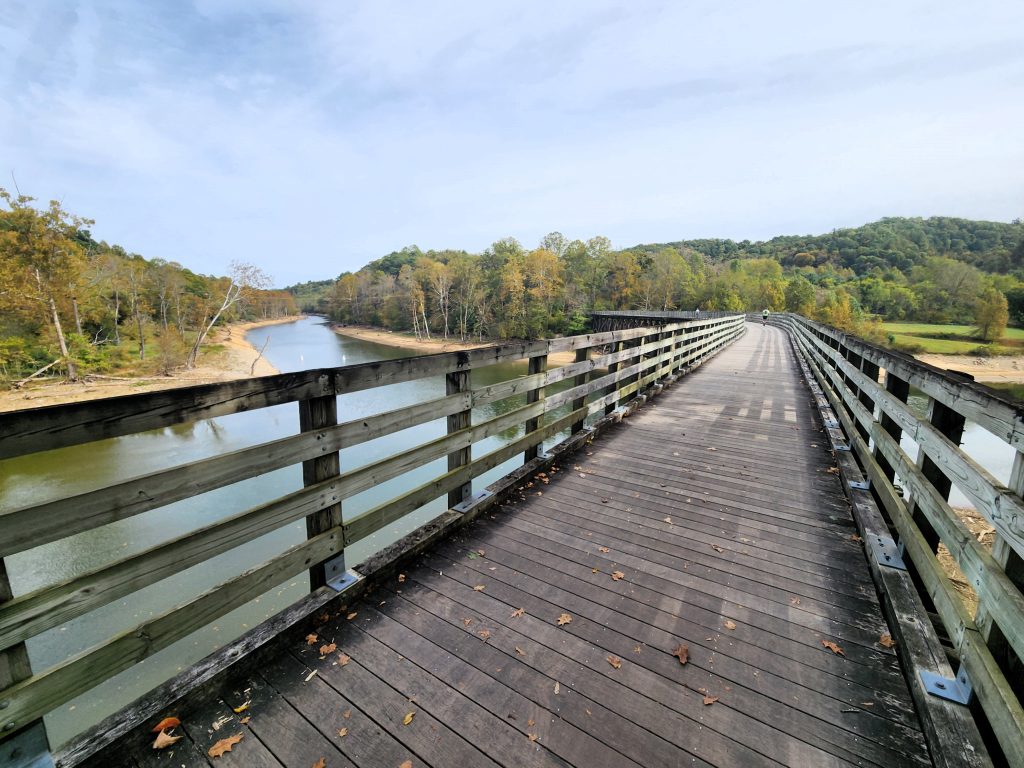
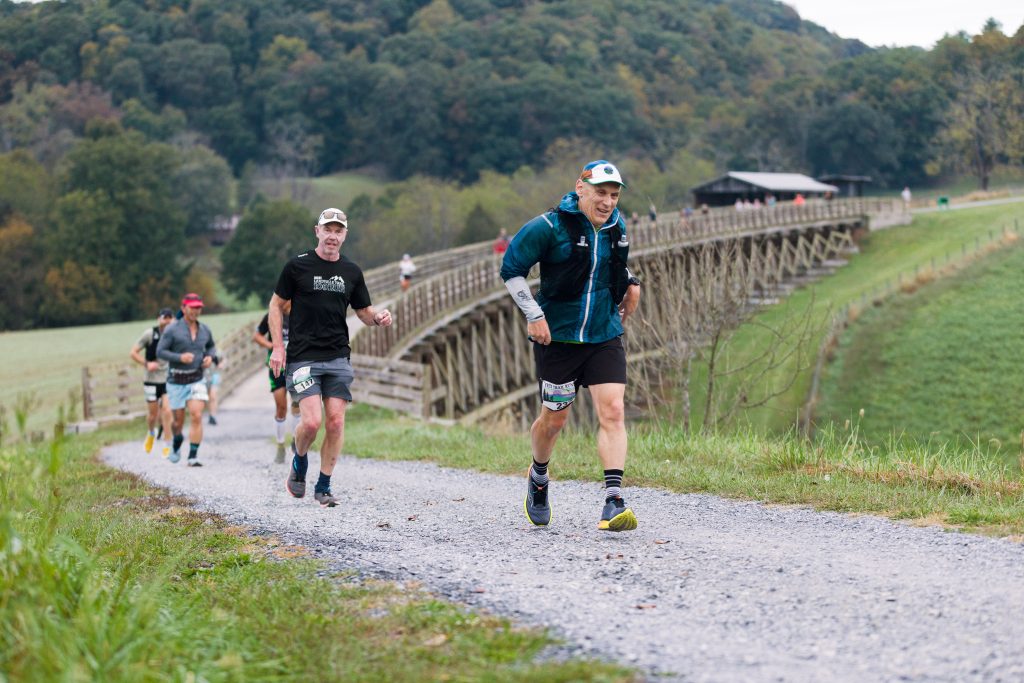
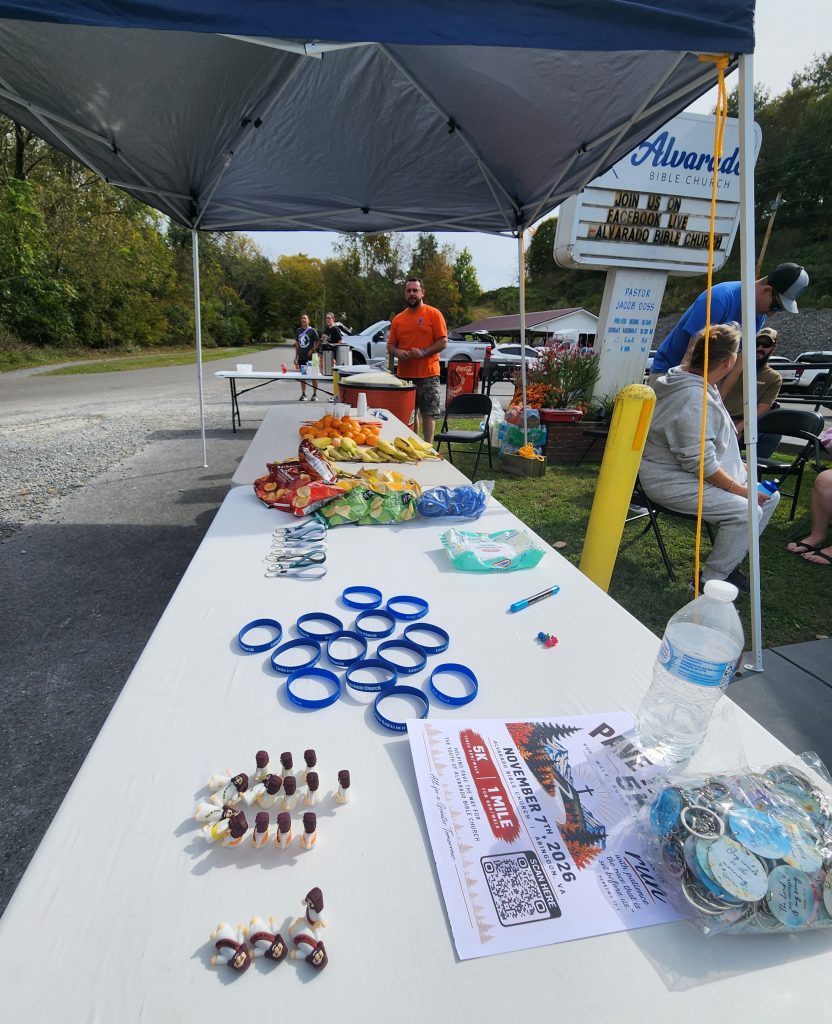
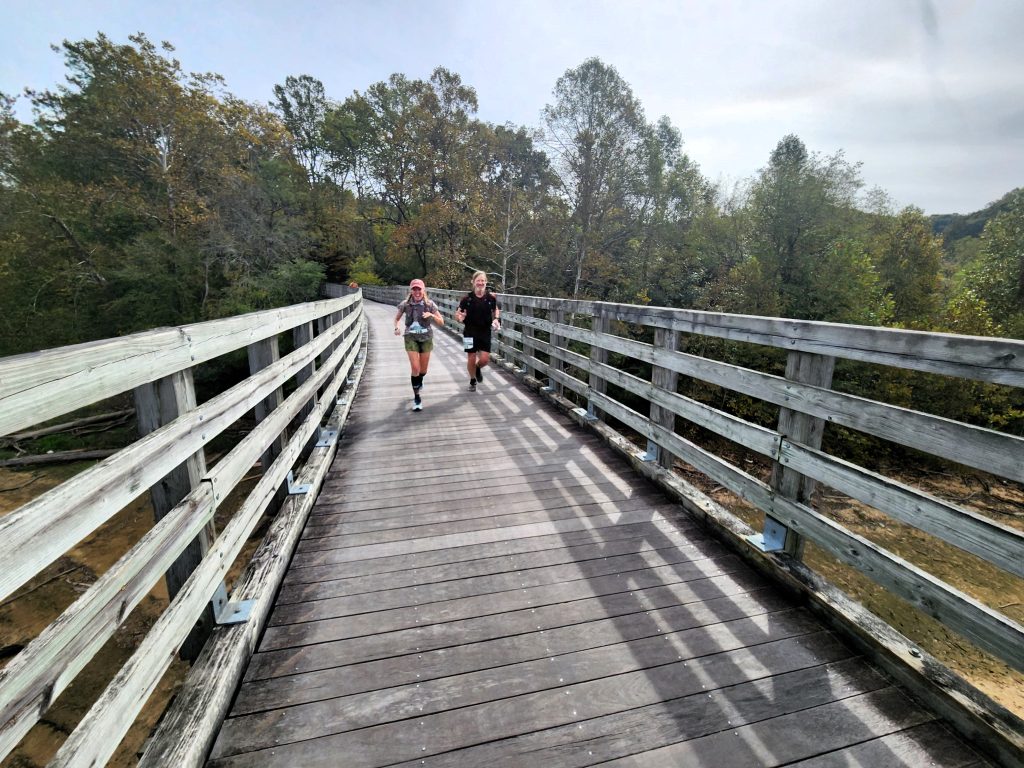
I really got to know that 16 mile stretch of the Virginia Creeper Trail between Abingdon and Damascus after running it six times. It was gorgeous running through mature tracts of southern hardwoods, across rolling farms, and along Laurel Creek and the South Fork Holston River. We were surrounded by rolling Appalachian Mountain peaks and the trail crossed a dozen trestles including a long curved one across the river. About midway the trail passed through the small community of Alvarado. Here we had a choice of two aid stations—one set up by the Yetis and the other by the local church whose congregation enjoys supporting this event. And they had good coffee—God bless them!
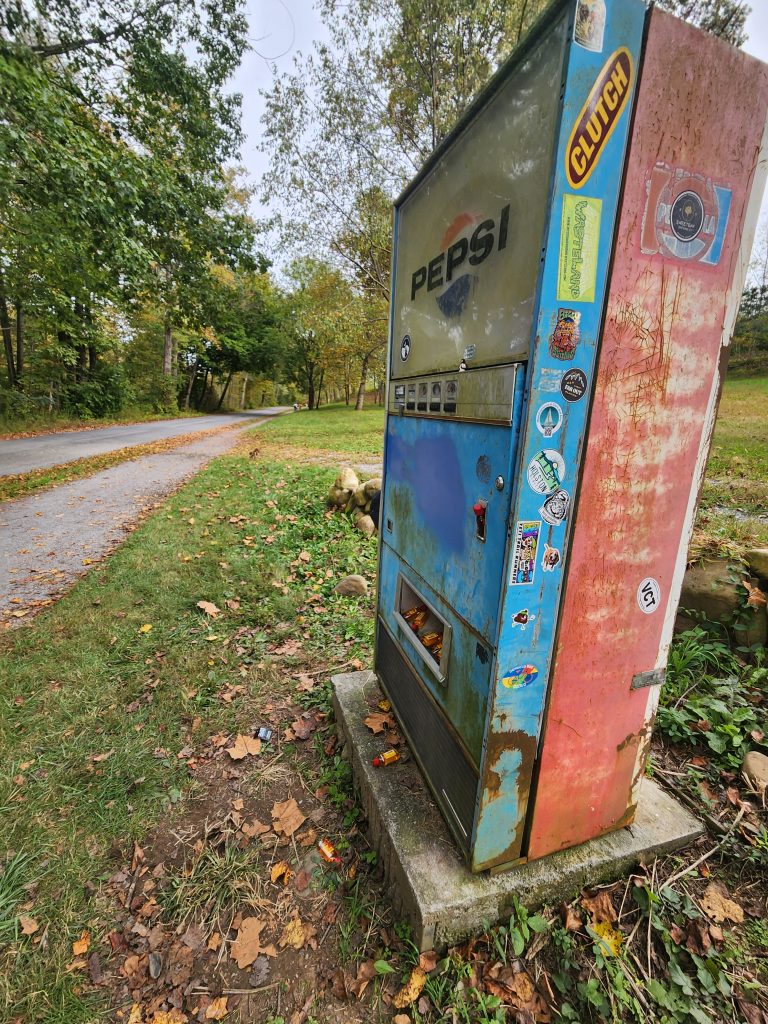
Damascus was the turnaround and we had to do a little out and back there on the Appalachian Trail. Damascus is one of the AT’s famous Trail Towns known for its hospitality to hikers. Here several residents also setup aid stations including one who offered beer. I had to pass on that or lest I may not have finished. Damascus is also famous for its Yeti Pepsi Machine—an old soda vending machine along the trail. On each passing it was stocked with small bottles of fireball for the taking. And they were taken! I just stuck to my usual hydration techniques thank you.
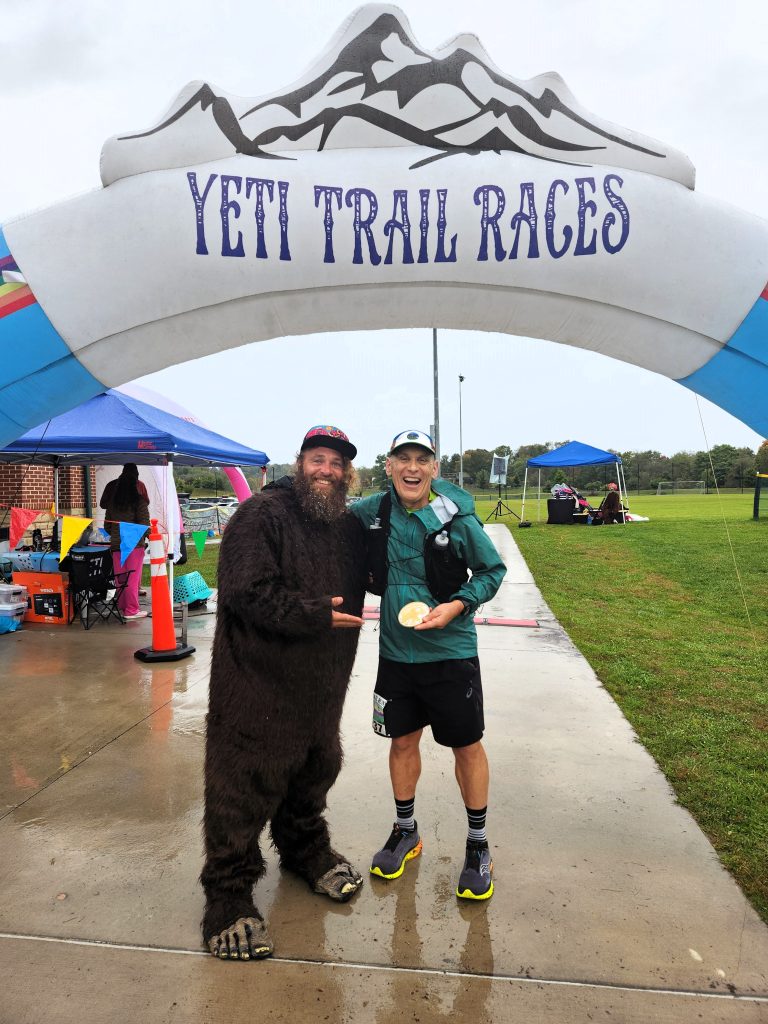
There was so much great energy on this run with a good mix of Veteran ultra-runners and 100 mile newbies. Race staffer Jarian Rich in his signature Yeti outfit was a dynamo at both Damascus and then later in Abingdon cranking out music, high-fiving runners and then giving them a big Yeti hug with their coveted belt bucket when they finished. He never wavered!
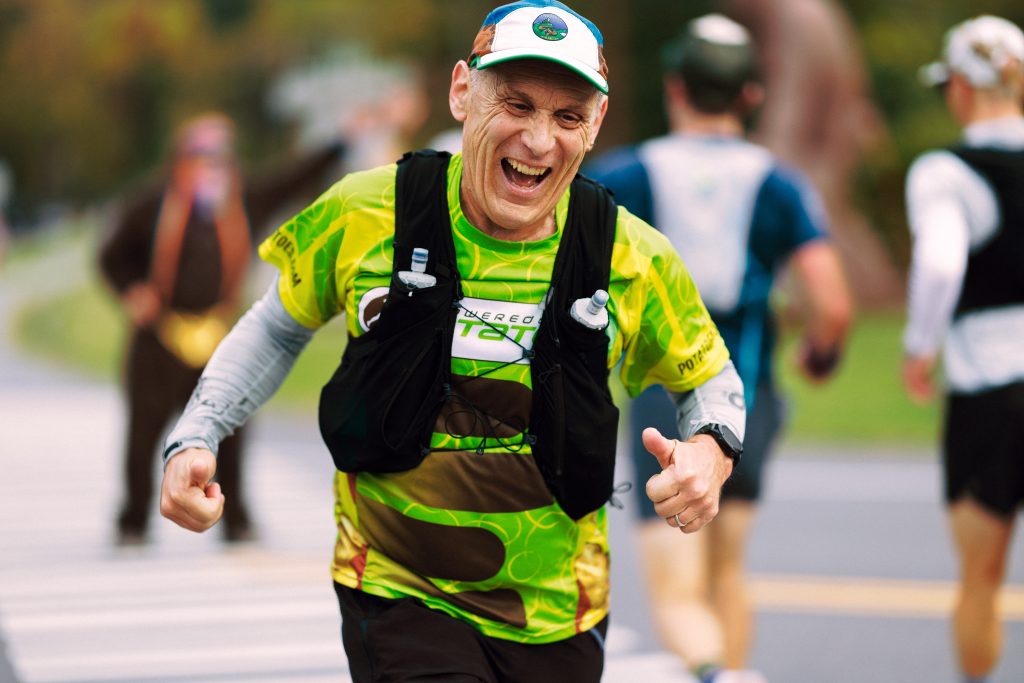
I absolutely loved running on the unpaved rail trail. It meant I got to run in regular road shoes and not worry too much about tripping. I did however had to dodge a possum in the wee hours of the morning! I started strong reaching the 50 mile mark at my second fastest time for that distance and reaching the 100K mark three hours faster than my best time in that distance. And while I was feeling good, no cramping, no bonking, no soreness, I evidently didn’t do a good job applying body glide because I ended up getting the absolute worse chaffing on my upper inner thighs. I was much slower on the last out and back. The chaffing was giving me some issues but I was still happy with my finish time of 25 hours 32 minutes and 5 seconds. This was 8 hours faster than my last 100 mile—although granted it this race was much easier with just 2,000 feet of elevation gain—not 17,400 feet and non-technical. I still think I could have gotten a sub 24 hour if I hadn’t chafed—so I will be looking for a future race to try for that target. I was the 3rd out of 11 over 60s to finish. And it was great getting to know many of the other older ultra-runners there!
I was able to stay hydrated and keep my electrolytes in check thanks to Gatorade and LMNT. And I was able to put down some solid food late in the race including of course potatoes. I had them in boiled form, mashed and via Tater Boost, a great product that consists of beets and potatoes and some savory seasoning. Just add water to it and it’s ready to consume. Other than chafing, I felt good after the race—just tired—and as usual the best thing about doing these races is the best sleep ever afterwards.
I spent the following post-race days doing recovery walks while absorbing history at the Booker T Washington National Monument, Appomattox Courthouse National Historical Park, and in Raleigh, North Carolina. And here’s a little potato history for you. Virginia was one of the first places in North America introduced to potatoes when in the 1620s the British governor of the Bahamas sent some to the Jamestown Colony. Today the state ranks around 20th in the nation in potato production with most of its growing on the state’s Eastern shore region. Potatoes wouldn’t be introduced to what is now Washington until the late 1700s via the Spanish. And today the Evergreen State ranks second in the nation in potato production!

Big Thanks to the Washington State Potato Commission for sponsoring me. I’m proud to be a member of Team Potato and to showcase the nutritional value and performance enhancement of potatoes as I continue training for 100 mile runs—and continue to run a marathon or ultra-marathon in all 50 states! Virginia makes state number 16. Next up is Illinois. I’ve got many miles and places yet to go—and lots of potatoes to consume to power me along the way.